Choosing a New Garage Door: Steel, Wood, Glass and What Fits a Bay Area Home
A buyer's guide to garage door materials — steel, wood, aluminum-glass, composite — insulation R-value, and curb appeal for period vs. modern Bay Area homes.
By Bay Area Garage Door Service · March 19, 2026 · 8 min read
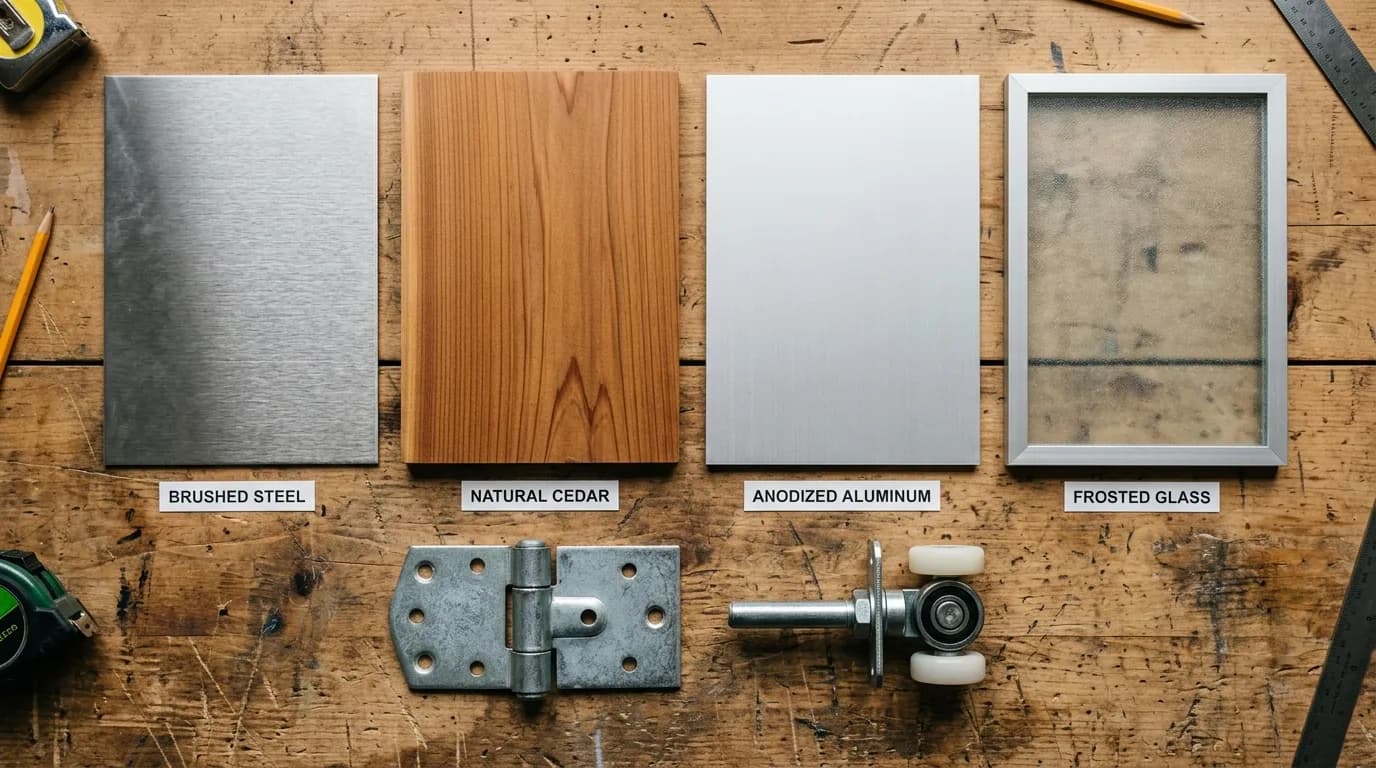
A new garage door is a bigger decision than most people expect. On a typical home it is the single largest element of the street-facing façade — often a third of what you see from the curb — and it is also part of your home's thermal envelope and security. Get the material right and you gain curb appeal, comfort, and a door that shrugs off your local climate for decades. Get it wrong and you have a door that warps, rusts, or looks out of place on the house. This guide walks through the real trade-offs between steel, wood, aluminum-and-glass, and composite, so you can match the door to your home and your microclimate.
What are the main garage door materials, and how do they differ?
Four families cover the vast majority of doors. Each has a distinct personality.
- Steel is the default for good reason: strong, low-maintenance, affordable across a wide range, and available in dozens of panel styles and finishes. Its weaknesses are denting from impact and, near the coast, corrosion where the finish is breached. Steel is usually specified by gauge — a lower number is thicker, tougher steel.
- Wood is the premium, character choice — real depth, grain, and the ability to be built to any style. It is also the most demanding: it moves with heat and humidity, and it needs periodic refinishing to stay beautiful and stable. On the right home it is unmatched.
- Aluminum and glass (full-view) doors define the modern look — slim aluminum frames holding tempered, frosted, or tinted glass that floods the garage with light. Aluminum resists rust, which suits coastal homes, but the frames dent more easily than steel and the glass is a privacy and insulation consideration.
- Composite and faux-wood doors wrap a stable core in a molded surface that mimics wood grain without wood's movement or upkeep. They are a strong middle path for buyers who want the look of wood with the stability of a manufactured door.
How much does insulation and R-value matter?
R-value measures how well the door resists heat flow — higher is better. It is easy to ignore and easy to regret ignoring. Whether it matters to you comes down to how the garage is used and where it sits.
Door construction falls into three broad grades:
- Single-layer — a single skin of steel or aluminum, essentially no insulation, lowest cost. Fine for a fully detached, unconditioned garage.
- Double-layer — a layer of polystyrene bonded to the skin, moderate insulation and noticeably quieter.
- Triple-layer — insulation sandwiched between inner and outer steel skins, the highest R-value, the most rigid and dent-resistant, and the quietest to operate.
You want meaningful insulation if the garage is attached, has living space above or beside it, or you use it as a workshop, gym, or office. In the Bay Area's variable climate — cool coastal fog on one side of a hill, hot inland afternoons on the other — an insulated door pays back in comfort, energy, and quiet, and it stiffens the door so it lasts longer too. If you are in a hot inland or wine-country setting, insulation does double duty against the heat, a point we dig into in our guide to protecting a garage door from wine-country heat.
Which material suits a period home versus a modern one?
The best door is the one that looks like it belongs on the house. Style and material go together.
- Craftsman, Spanish, and traditional homes tend to want depth and warmth — carriage-house steel with overlay hardware, or real wood in cedar or mahogany. A flat, glossy modern panel fights this kind of architecture.
- Mid-century and contemporary homes come alive with clean lines: full-view aluminum and glass, flush wood, or a smooth long-panel steel in a matte finish.
- Farmhouse and transitional homes pair beautifully with composite carriage styles or painted wood that reads as authentic without the upkeep of raw timber.
Color, window placement, and hardware do as much work as the material itself. A well-chosen door quietly lifts the whole façade; a mismatched one draws the eye for the wrong reason. This is exactly where a design consult earns its keep — we measure the opening and review materials and styles against your home's architecture before you commit, as part of a new garage door installation, and we provide a free written estimate with no pressure on the number.
What about durability in the Bay Area's climates?
Material choice is not just aesthetics — it is a bet on how the door will hold up where you live.
- Near the coast, salt air is the enemy. Aluminum and quality composite resist corrosion best; if you love steel, insist on a well-finished, higher-grade door and stay on top of maintenance. Raw or under-finished wood struggles in constant salt and damp.
- Inland and in wine country, big temperature swings and summer sun are the stress. Insulated construction and stable materials matter, and any wood needs a UV-protective, heat-rated finish.
- Everywhere, weight matters. Wood and glass doors are heavy, and a heavy door demands correctly sized high-cycle springs and a strong, quiet opener — otherwise you burn out the motor and wear the hardware early.
If a genuine wood statement door is what you are after, it is worth having it built and finished for your specific exposure rather than pulling a stock unit off a shelf. We design and engineer custom and wood garage doors with the right species, finish, insulation, and spring package for the door's real weight and your microclimate, so a beautiful door is also a reliable one.
Don't overlook the hardware and glass choices
Two details get decided almost as an afterthought and then shape how the door lives for decades. The first is glass. Windows and full-view panels bring in light and lift the design, but they are also where privacy, insulation, and safety meet — frosted or tinted glazing preserves privacy, insulated glass limits heat transfer, and tempered glass is the safe choice for anything at reach. Think about which matters most for your garage before you fall in love with a wall of clear glass. The second is the hardware and finish package: hinges, handles, and decorative overlays should suit the door's exposure, and paint or stain should be rated for your sun and salt. A carriage door with the wrong hardware finish can look dated within a season near the coast.
Finally, look past the panel to what carries it. A door is only as good as the springs, rollers, and opener behind it, and heavier materials demand a beefier package. Sizing high-cycle springs and a suitable opener to the door's real weight is what keeps a handsome new door running quietly for years instead of burning out its motor — which is exactly the kind of engineering a good installer builds into the quote rather than bolting on afterward.
What should you decide before you call for an estimate?
You do not need to have everything figured out, but a few decisions make the design conversation far more productive. Think through how the garage is used and whether it needs to be conditioned, since that drives the insulation grade. Look at your home honestly and decide whether you want the door to blend in or make a statement. Consider your appetite for upkeep — wood rewards attention, while composite and steel forgive neglect. And factor your climate: coastal, inland, or wine country each point toward different materials and finishes. Do not forget the mechanics behind the door, either; a heavier material changes the springs and opener you need, and pairing a new door with a modern opener is often the moment to consider whether a smart garage door opener upgrade is worth it.
Bring those preferences to the consultation and let the fit-and-engineering details be worked out on site. When you are ready, we will measure, walk you through materials and styles suited to your home and climate, and give you a free, itemized design estimate — there is never a charge for the consultation and no obligation to proceed.