Wine Country Heat and Wildfire Season: Protecting Your Garage Door in Napa & Sonoma
Big day-night temperature swings warp wood doors, vineyard dust fouls tracks, and fire season adds heat and ash. How to protect a Napa or Sonoma garage door with seals, insulation and tune-ups.
By Bay Area Garage Door Service · April 22, 2026 · 7 min read
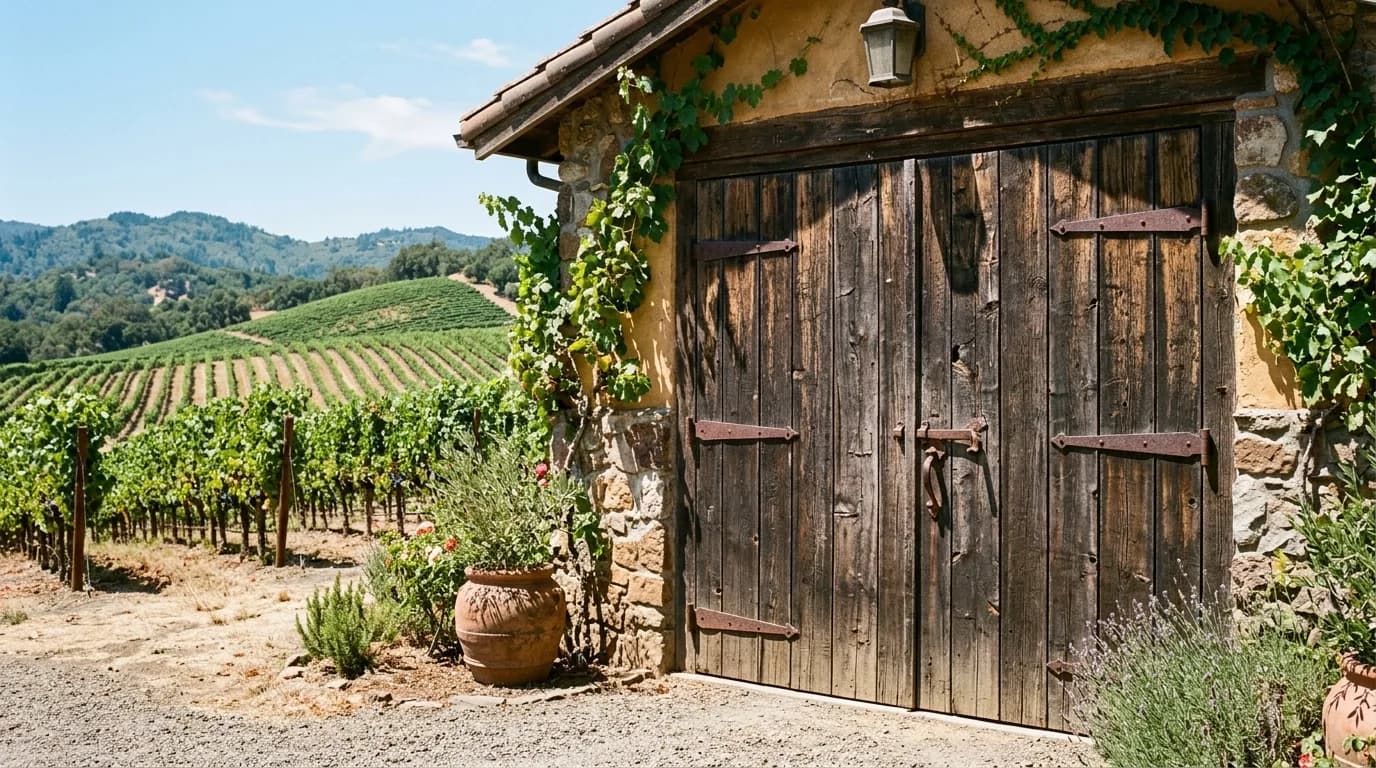
Wine country is beautiful, and it is also hard on hardware. A garage door in St. Helena or Healdsburg lives through a daily temperature swing that a door in San Francisco never feels — a 45-degree morning that climbs past 95 by mid-afternoon in July, then drops again after sundown. Add a summer of fine vineyard dust, a stretch of triple-digit heat, and the ash and radiant heat that arrive with fire season, and you have a set of stresses that quietly age a door years faster than the calendar would suggest. Here is what actually happens to the door, and how you keep it working through it.
Why does wine-country heat warp a garage door?
Every material on your door expands when it heats and contracts when it cools, but they do not do it at the same rate. That mismatch is where the trouble starts.
- Wood is the most reactive. It moves with both heat and humidity, and a wide day-night swing makes it expand and shrink on a daily cycle. Over a season that flexing opens joints, lifts finish, and can leave a solid-wood or carriage-house door bowed enough to bind in its opening.
- Steel handles the temperature better but conducts it straight into the garage. A single-layer, uninsulated steel door in full afternoon sun can turn the garage into an oven and radiate that heat into an attached room above or beside it.
- Composite and clad doors sit in between — more stable than raw wood, but the seams, trim, and glazing still expand and contract, and sealant that is not rated for the swing will crack.
The parts that suffer first are the ones with the tightest tolerances: the weather seal at the bottom, the perimeter stop molding, the section joints, and the finish itself. A door that fit perfectly in spring can bind, rub, or leave daylight gaps by August.
What does vineyard dust and dry heat do to the moving parts?
The mechanical side of the door has its own wine-country problem, and its name is dust. Cultivated ground, gravel drives, and dry summer wind put a constant haze of fine grit in the air, and that grit is drawn to exactly the wrong places.
When abrasive dust lands on a lubricated roller stem, hinge, or spring, it turns the lubricant into a grinding paste. Instead of protecting the metal, the oil now holds abrasive against it on every cycle. You hear it as a new grinding or squealing note, and you feel it as a door that runs rougher than it used to. Dry heat compounds this by thinning and cooking off the wrong lubricants — anything light or solvent-based evaporates and leaves the parts running dry.
The tracks collect the same grit in their channels, so rollers ride over a gritty bed and wear faster, developing flat spots that make the door bind and clatter. Left alone, this accelerates roller and hinge wear, stresses the opener, and shortens spring life — and a door that runs rough in the dust also runs rough in the heat, so the two problems compound each other through the summer. The fix is not more oil — it is the right oil, applied to clean parts, which is a core part of a professional garage door maintenance tune-up. A technician cleans the tracks, wipes and re-lubricates the moving parts with a proper garage-door-rated product that resists dust rather than trapping it, and checks that nothing is already worn to the point of failure.
How does fire season change the picture?
Fire season adds two stresses most homeowners never think about until they are living through one. The first is radiant heat: even a fire miles away, plus consecutive days over 100, drives the door and the garage well beyond normal operating temperature. Springs are wound to a tension matched to your door's weight, and extreme heat is one more thing working them harder. The second is ash and fine particulate, which behaves like vineyard dust but finer, settling into tracks, seals, and the opener's sensor eyes.
There is also an air-quality and sealing angle. A garage door is one of the largest openings in your home's envelope, and worn or gapped weather seals let smoke, ash, and heat migrate into an attached garage and the living space beyond. Intact bottom and perimeter seals, and an insulated door, do real work here — keeping smoke out and conditioned air in on the days you most want the house sealed up.
If you are choosing or replacing a door in this climate, material and finish matter enormously. Our guide to choosing a new garage door and the right material walks through how steel, wood, and composite behave, and for a genuine wood statement door we build and finish custom and wood garage doors with stable species and UV-protective, heat-rated finishes chosen specifically for hot inland exposure.
What does a pro actually do to protect the door?
A climate-focused tune-up is different from a generic "spray the hinges" visit. On a wine-country door we are looking at heat and dust specifically:
- Re-balance for the season. Heat and hard use shift spring behavior. A technician checks that the door still holds its position at mid-travel, so the opener is not fighting an out-of-balance door in the worst heat.
- Clean and correctly lubricate. Tracks are cleared of grit and ash, and rollers, hinges, bearings, and springs get the right lubricant — not a light solvent that flashes off in the heat and not a heavy oil that grabs dust.
- Inspect and renew seals. The bottom astragal and perimeter stops are checked for heat cracking and gaps, and replaced before they let ash and hot air past.
- Check the finish and panels on wood doors. Lifting finish, opening joints, or early bowing are flagged while a re-seal still fixes them, rather than after the panel has warped.
- Test the opener and safety system. The photo-eye sensors are cleaned of dust and ash and re-aligned, and the auto-reverse is tested, so the safety system is not defeated by a filmed-over lens.
When should you call for service in Napa or Sonoma?
Some symptoms mean it is time to stop waiting for the next scheduled visit. Call if the door starts binding or rubbing in its opening as the season heats up, if you hear a new grinding or squeal, if you can see daylight or feel a draft around a closed door, or if a wood door is visibly bowing, splitting at a joint, or shedding finish. After a heat wave or a smoke event, a quick check of the seals and sensors is cheap insurance. And in a climate this hard on hardware, a proactive tune-up before the peak of summer beats an emergency call in the middle of it.
Homeowners across St. Helena, Healdsburg, and the surrounding valleys deal with the same heat, dust, and fire-season pattern every year, which is why we tailor garage door service in St. Helena and the wider wine country to the way this climate actually treats a door. If yours is fighting the heat, book a tune-up and get a free written estimate for any work it needs — there is never a charge for the inspection, and no obligation to proceed.