How Bay Area Coastal Fog and Salt Air Wear Out Your Garage Door
Marine-layer humidity and salt air corrode garage door springs, cables and rollers in SF, Marin and the Peninsula. Here's the damage it does and a maintenance cadence for coastal homes.
By Bay Area Garage Door Service · May 8, 2026 · 6 min read
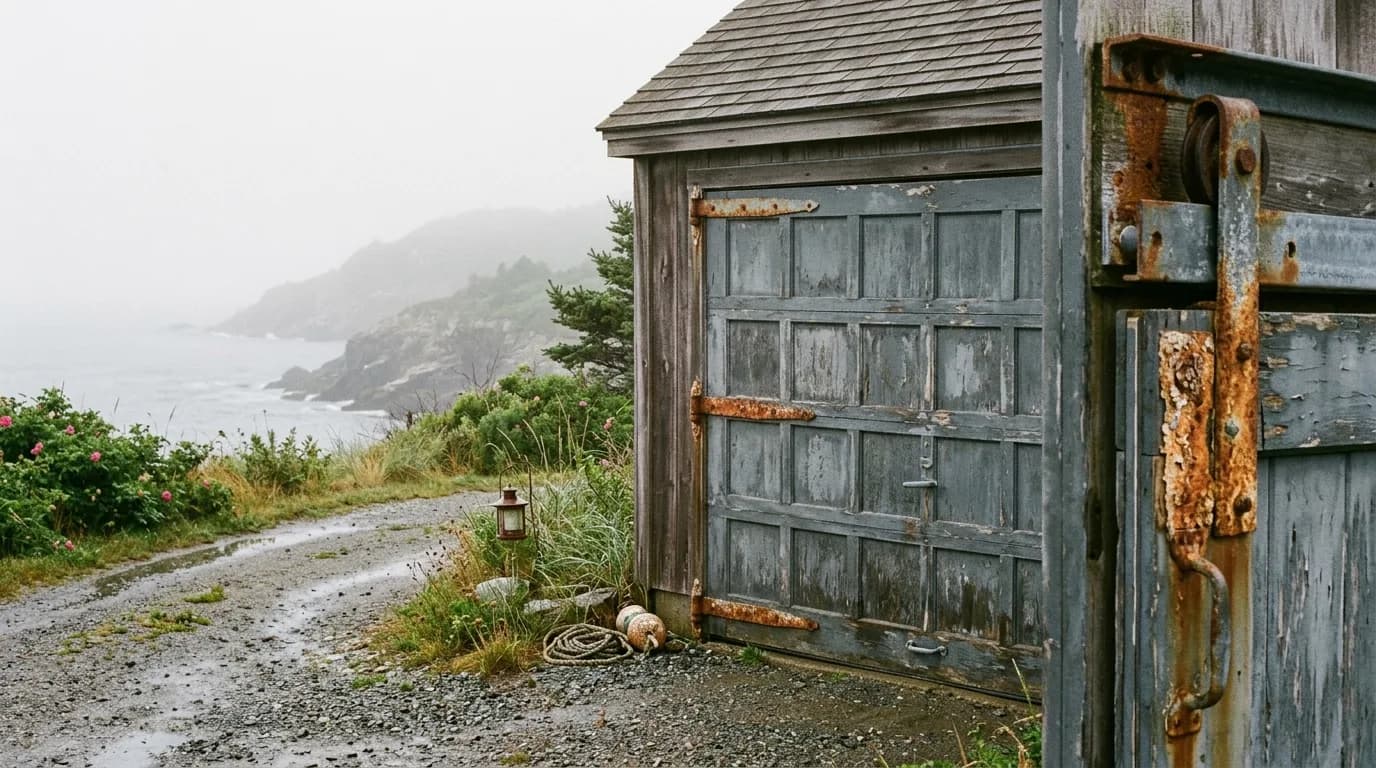
If you live within sight or smell of the water — the avenues out toward Ocean Beach, the hills above Sausalito, a Peninsula home that catches the afternoon marine layer — you already know the fog rolls in most evenings and doesn't fully burn off some days at all. What's less obvious is what that damp, salty air is quietly doing to your garage door. The same climate that keeps your summers cool is corroding the steel components inside your door years faster than it would inland. If your door has started sounding rougher, streaking rust, or feeling sluggish, the coast is very likely the reason.
Why does coastal air wear a garage door out faster?
Two things are working against the metal in a coastal garage: persistent humidity and airborne salt. The Bay Area's marine layer keeps relative humidity high for long stretches, and near the shoreline the fog and breeze carry microscopic salt particles inland. Salt is hygroscopic — it pulls moisture out of the air and holds a thin, briny film against every metal surface it settles on. That film is an electrolyte, and it accelerates the electrochemical reaction we call rust.
A garage makes it worse, not better. Doors open and close several times a day, drawing moist outside air in, and an unheated, unconditioned garage lets condensation form on cold steel overnight. So the springs, cables, rollers, hinges, and fasteners spend their lives cycling through wet and dry, coated in salt. Inland, the same parts might stay dry for weeks. On the coast, they rarely fully dry out.
The temperature swing between a foggy night and a sunny afternoon adds one more accelerant. As the metal cools and warms, humid air condenses on it and then evaporates, and each cycle leaves the salt behind and concentrates it further. Over months, that repeated wetting and drying is what turns a light surface haze of rust into deep pitting on a spring or a cable that's lost real strength.
Which parts corrode first, and what does that look like?
Corrosion doesn't hit the whole door evenly. It goes after the load-bearing steel first, and those are exactly the parts you can least afford to have fail:
- Springs. Torsion and extension springs are wound steel under constant tension. Rust pits the surface of the wire, and each pit becomes a stress concentration point where a crack can start. A corroded spring reaches the end of its cycle life well before its rated 10,000 cycles, and it fails suddenly. Because a snapped spring is genuinely dangerous, we cover why in this piece on broken springs — the short version is that coastal springs simply don't last as long.
- Lift cables. These braided steel cables carry the door's full weight. Salt works into the strands, rusts them from the inside, and they begin to fray. A frayed cable is a warning; a snapped one drops the door crooked and off its track.
- Rollers and bearings. Unsealed steel bearings seize when rust invades them. A roller that won't turn drags in the track, wearing both parts and eventually climbing out of the channel.
- Hinges, brackets, and fasteners. Rusted hinges squeal and bind; corroded bolts and track brackets work loose, throwing the door out of alignment.
The tell-tale signs are a door that has gotten louder or grittier, orange streaks running down from the rollers or spring, a spring or cable with visible surface rust, and hinges that squeal no matter how much you lubricate them.
Where in the Bay Area does this hit hardest?
Proximity to the water is the biggest factor, but so is exposure. Homes in San Francisco's western and coastal neighborhoods, the waterfront communities of Marin like Tiburon and Belvedere, and Peninsula homes that sit in the fog belt all see accelerated corrosion. A house perched on an exposed hillside catching the onshore breeze weathers faster than one tucked in a sheltered valley a few miles inland. Detached garages, and garages with worn weather seals that let the damp air pool inside, fare worse still. If your home checks those boxes, assume your door is aging on the fast track.
What does the right maintenance actually involve?
You can't change the weather, but you can slow the damage dramatically. The goal is to keep salt and moisture from sitting on bare steel, and to catch corroding parts before they fail. That's the heart of a proper garage door maintenance tune-up, and for coastal homes it means a few things specifically:
- Proper lubrication with the right product. A garage-door-rated lubricant on the springs, rollers, hinges, and bearings leaves a protective film that displaces moisture. Skip WD-40 as a lubricant — it's a solvent that strips protection and attracts grime. Good lubrication is your single best defense against salt-air corrosion.
- Inspecting the high-risk parts. A technician looks closely at the springs and cables for pitting and fraying, checks the rollers and bearings for seizing, and flags anything trending toward failure while it's still a planned repair rather than an emergency.
- Tightening and re-aligning. Corrosion loosens brackets and fasteners; a tune-up snugs them back up and re-aligns tracks before the door starts to bind.
- Weather sealing. Fresh seals keep some of the damp, salty air out of the garage in the first place, protecting everything inside.
- Corrosion-resistant upgrades where it makes sense. When a coastal spring or set of rollers is due, coated or galvanized springs, sealed nylon-and-stainless rollers, and higher-cycle hardware are worth considering. Ask about them during a spring replacement so the new parts stand up to the salt better than the ones they replace.
How often should a coastal home service its garage door?
The general rule for garage doors is a professional tune-up once a year. For a home in the salt-air zone, that's not often enough. We recommend a service visit every six to nine months for coastal and heavy-fog properties, because the corrosion clock runs faster here and a spring or cable can go from "some surface rust" to "failed" in a single wet season. Homes right on the water, or those that cycle the door many times a day, sit at the shorter end of that range. If you're not sure where your home falls, our overview of how often to service a garage door helps you set the right interval, and different microclimates call for different care — the flip side of the coast is covered in our look at how wine-country heat wears a door.
When should I call a technician?
Book a visit if you can see rust on the springs or cables, hear new grinding or squealing that lubrication doesn't quiet, notice the door moving unevenly, or simply can't remember the last time it was serviced and you live near the water. Don't wait for a snap. A corroding spring or a fraying cable gives warning signs, but once it lets go you've got a dead-weight door, a possible off-track situation, and a same-day emergency instead of a scheduled tune-up. Our technicians know exactly how the coastal microclimates around the Bay treat a door, and every visit starts with a full-system inspection and a free written estimate — so you can stay ahead of the salt instead of chasing it.