How Often Should You Service Your Garage Door? A Bay Area Maintenance Schedule
Cycle-based vs. calendar-based garage door maintenance, what a tune-up covers, and how the Bay Area's coastal and inland microclimates change the right service interval.
By Bay Area Garage Door Service · April 6, 2026 · 6 min read
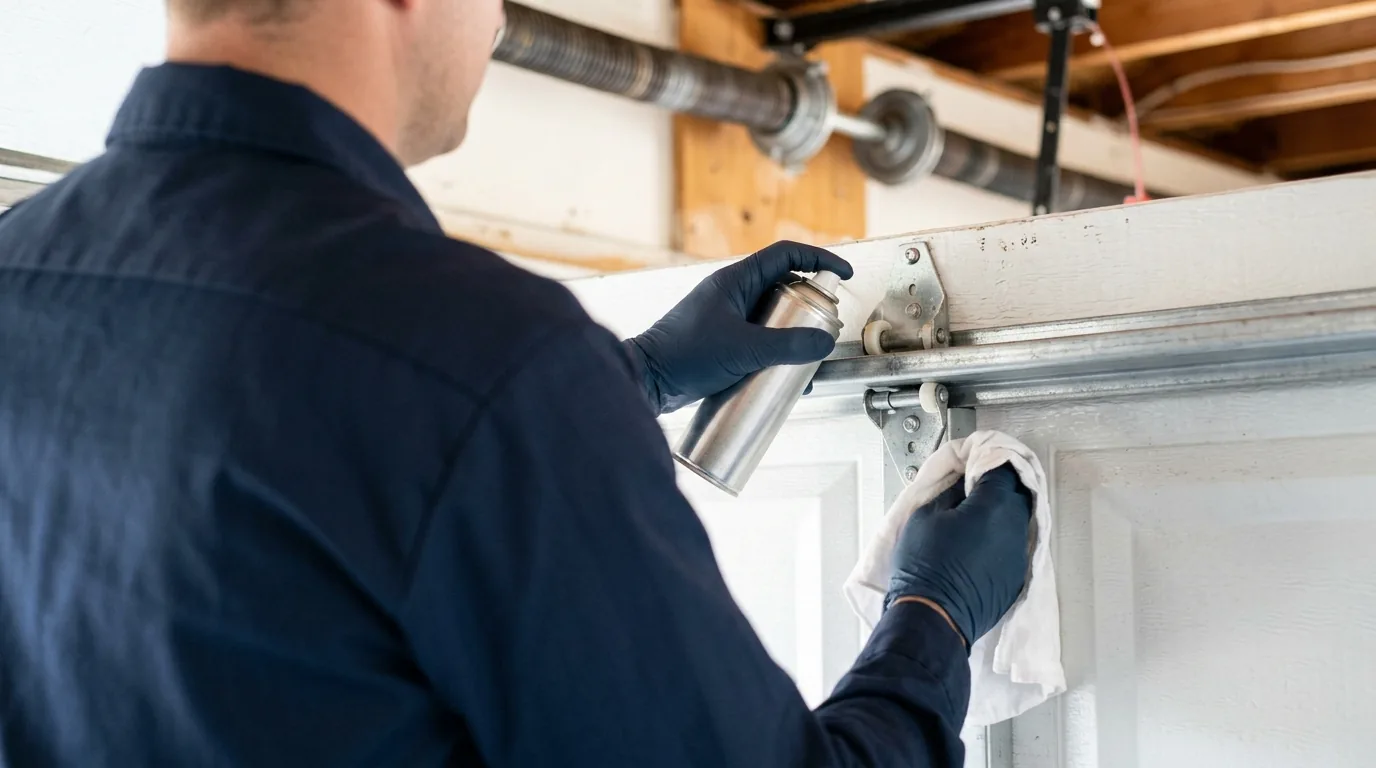
Almost nobody thinks about their garage door until it stops working — usually on a morning when a car is trapped behind it and you are already late. Yet the garage door is the largest and heaviest moving object in most homes, and it runs on parts under real tension that wear a little with every use. The good news is that most breakdowns announce themselves months in advance and are entirely preventable on a sensible schedule. The question is what that schedule should be, and the honest answer is that it depends on how much you use the door and where in the Bay Area you live.
Should you go by the calendar or by the cycles?
There are two ways to think about maintenance timing, and the right approach uses both.
Calendar-based maintenance is the familiar "once a year" rule of thumb. It is a fine baseline, but it ignores how hard the door actually works. Two identical doors installed the same day can be in wildly different condition a year later depending on use.
Cycle-based maintenance is how the trade actually thinks about wear, because the parts are rated in cycles. One cycle is one full open and one close. A spring is typically rated for about 10,000 cycles, and rollers, cables, and hinges age on a similar clock. Here is why that matters:
- A household that opens the door twice a day runs roughly 1,500 cycles a year — that spring might last a decade.
- A busy family, a home office, or a property where deliveries and staff come and go can hit six to ten cycles a day, burning 2,500 to 3,500 cycles a year and reaching the same wear point in three or four years.
- A door on a detached workshop or a vacation home that is barely used still ages from corrosion and dried-out lubricant even though the cycle count is low.
So the practical rule is: start from once a year, then tighten the interval if you are a heavy user or your microclimate is harsh. Do not stretch it past a year just because the door seems fine — "seems fine" is exactly the state a door is in right before a spring lets go.
What does a garage door tune-up actually cover?
A real maintenance visit is a multi-point inspection and adjustment, not a quick spray of the hinges. When we perform a garage door maintenance tune-up, we are working through every wear item on the system:
- Spring tension and balance. We confirm the door holds its position at mid-travel, the signature of a properly counterbalanced door, so the opener is not straining against dead weight.
- Cables, rollers, hinges, and bearings. These get inspected for fraying, flat spots, cracking, and play — the small failures that later strand the door or throw it off its track.
- Track alignment and fasteners. Brackets loosen with vibration over thousands of cycles; we re-align the tracks and re-tighten hardware.
- Opener force and travel limits. We set how far and how hard the opener drives, so the door seals at the bottom without slamming and reverses correctly.
- Safety system. The photo-eye sensors and the auto-reverse are tested against an obstruction — the systems that protect children, pets, and cars.
- Lubrication. The moving parts are cleaned and re-lubricated with a proper garage-door product, never a light solvent that attracts grime and flashes off.
You should come away with an honest report of what is healthy and what to plan for, so repairs happen on your schedule instead of as a 7 a.m. emergency.
How do Bay Area microclimates change the interval?
The Bay Area is not one climate — it is dozens, and each treats a door differently. Where you live can move your maintenance interval by months.
- Coastal and foggy areas — think Pacifica, the outer avenues, Half Moon Bay — put salt and constant humidity on the hardware, which rusts springs, cables, and rollers from the inside out. Corrosion is the single biggest life-shortener near the water, and it argues for service every six to nine months. Our deep dive on protecting a garage door from coastal salt air explains why and what to do about it.
- Hot inland and wine-country areas deal with big day-night temperature swings, summer dust, and fire-season heat, all of which age seals and cook off lubricant. These doors also benefit from a tighter interval.
- Milder inland-bay neighborhoods with moderate use can often hold to a solid annual tune-up.
The point is not a single magic number. It is matching the interval to the two variables that actually drive wear — how often the door cycles, and how harsh its environment is.
What does skipping maintenance actually cost you?
It helps to see how small neglect snowballs, because the failures are connected. Dried-out lubricant makes rollers and hinges drag, which forces the opener to pull harder, which stresses the springs and the drive gear. A cable that starts to fray goes unnoticed until a strand lets go, the door drops crooked, and a roller jumps the track — now a five-minute lubrication that was skipped has become a door hanging off its rails. Loose track brackets, left to rattle through thousands of cycles, let the door drift out of alignment until it binds against the frame. None of these start as emergencies. They start as the quiet symptoms a tune-up is designed to catch, and they turn into emergencies only when nobody is looking. Maintenance is not really about the door running a little smoother today; it is about not being stranded on the worst possible morning, and about the whole system reaching its full lifespan instead of half of it.
What warning signs mean don't wait for the next visit?
Between scheduled tune-ups, the door will usually tell you when something is trending toward failure. Call sooner rather than later if you notice any of these:
- The door has gotten louder, jerkier, or shakier than it used to be.
- It hesitates, stops partway, or reverses on its own.
- You see a frayed cable, a gap in a spring coil, or a roller sitting crooked in its track.
- The door feels heavy or slams the last few inches when you lower it by hand.
- It has simply been years since anyone looked at it.
A word of caution here: maintenance is safe to schedule, but the parts under tension are not safe to adjust yourself. Springs and cables hold enough energy to cause serious injury, which is why spring work is a technician's job — as we explain in detail in why a broken garage door spring is never a DIY repair. If a tune-up reveals a spring at the end of its cycle life, a proper garage door spring replacement done in pairs is the safe, lasting fix.
When should you book your next service?
If you cannot remember the last time your door was serviced, that is your answer — it is due now. Otherwise, set a baseline of once a year, move to every six to nine months if you are a heavy user or live in a coastal or high-heat microclimate, and call between visits the moment the door starts sounding or behaving differently. A tune-up costs a fraction of an emergency repair and adds years to the life of the whole system. We will give you a free written estimate for anything the inspection turns up, with no charge for the diagnosis and no obligation to proceed.